Murder stories have a grip on us like nothing else. It can be extremely unsettling, but we still feel the need to understand the story. Who did it? Why? And how was justice finally served?
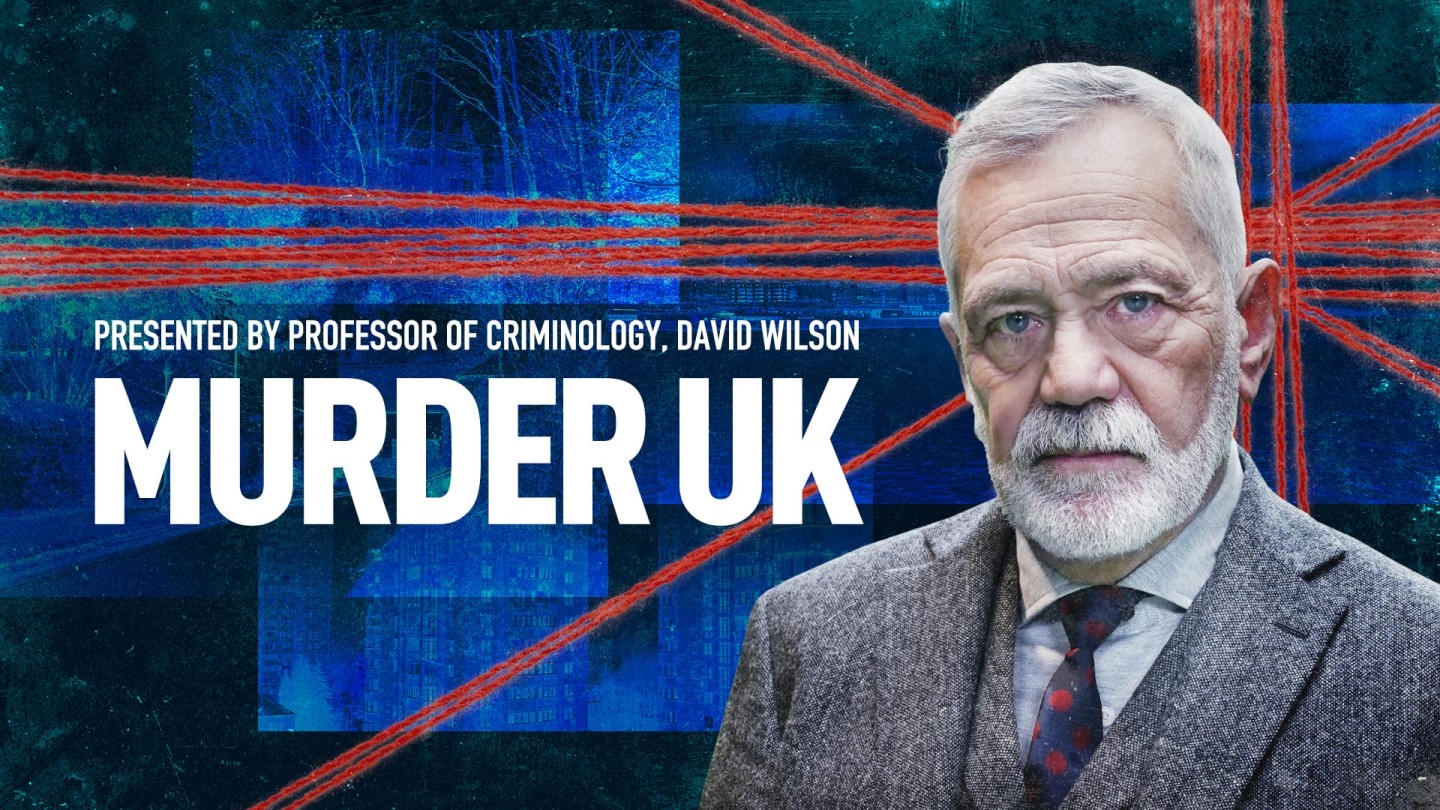
That’s exactly what Murder UK on TRUE CRIME dives in and explores.
Hosted by leading criminologist David Wilson, each episode examines a different murder case from across the UK, unpicking not just what happened but how investigators solved it, and what those crimes reveal about our society. The series looks beyond the headlines to shine a light on the people behind the crimes, and the justice processes designed to protect us all.
Produced by First Look TV, the show is journalistically purposeful, asking difficult questions about why these stories matter and what they can teach us today. Rather than focusing on the salacious details, Murder UK explores the wider context, always keeping the humanity of the story at the centre.
We caught up with David Wilson and First Look TV’s Will Hanrahan to talk about the cases that stay with them, what makes murder such a compelling subject for television, and why Murder UK offers something new even for seasoned true crime fans.
You can watch Murder UK on TRUE CRIME.
What originally drew you to the field of criminology?
David Wilson: It was rugby! An incident on the rugby field when I was a student changed the plans that I had for my life after Cambridge. Briefly, I punched a forward in the face and was sent off. I broke his nose. He was also sent off for the foul he had committed that caused the incident.
A couple of hours later we were in the bar becoming best of friends. That week the Cambridge Evening News carried a story about a young man, the same age as me but an unemployed labourer in the town, who broke the nose of a bouncer in a club in an incident. The young man got sent to prison.
I wanted to know how his violence had led to jail, and my own violence – which was just as serious as his – had no such consequences. The answer is, of course, class, privilege, social and actual capital to avoid the label offender being applied to what you do. In fact, I still think that that holds true. Anyway, that incident changed the course of my studies and my career choices.
What is it about murder that makes it such a fascinating subject for TV viewing?
I don’t think that it is the murder itself which draws attention, but how the murder gets solved. Murder is our most serious offence, and so we want to know not only why the perpetrator committed murder, but also the steps that were taken to ensure justice for the victim.
It’s a puzzle at the end of the day, and people like to solve puzzles – they enjoy the process of discovering the solution. The “why” is important too of course because I know from speaking with members of the public that they usually have questions about why people would behave like that – whatever that may be.
What draws you and the team to certain murder cases for Murder UK?
I like us to use cases that can throw a light on what can be done to reduce the incidence of murder in the future. We do not need to accept that the level of murder that we have is inevitable, but that we can do something to reduce the prevalence of murder. We have therefore often chosen cases where we can draw attention to, for example, the intimate partner femicide timeline, so that viewers can see for themselves the 8 stages of that timeline and how that might apply in their own lives, or the lives of their families or friends.
Has anything changed about the way you think about murder since you began hosting the show?
No, not the way that I think, but I am delighted to say that our homicide rate (murder and manslaughter) is falling – both in England and Wales and in Scotland. In Scotland it is at its lowest level since records began and all 45 homicides there last year were solved. That’s 45 too many but quite an achievement. Even in London the homicide rate is down. That is the major change in murder as a crime and a phenomenon since I started to present the show.
Are there any cases from your career, or in the show, that you think back to often, and why?
I still think about cases that involve vulnerable victims – the very young, or the elderly. All murders are equal, but somehow there is for me an added dimension to the case when the victim is a baby or toddler, or someone who is very frail. I also keep drawing attention to the fact that women over the age of 60 are the most common group of people targeted in this country by serial killers.
I find that shocking as it tells us something about the place of older people in our culture and how their deaths – even when those deaths are sudden and unexpected – do not cause any serious questioning from the authorities. Think about Harold Shipman and how he was able to kill his older patients for years.
We also spoke to Will Hanrahan, from production company First Look TV, about Murder UK and what makes the world of true crime such an enduring phenomenon.
There are many true crime shows out there. What would you tell someone who thinks they've seen it all, to convince them to watch this one?
Will Hanrahan:
True Crime series need to be journalistically purposeful. What this series does with David is shine a light on how those crime and justice processes work for us to detect killers but also acts as a warning about the dangers we can face.
These are crimes on our doorstep - murders in plain sight, in a way. Whilst our lives are good most of the time in most places, we get confidence knowing there is a system in place to protect us and seek justice for us.
Is there something about making this series that people may not expect to be as difficult as it is?
With all our series our biggest challenge is answering this question: 'Why do people need to know about this?' So, I will task my teams to avoid the salacious in favour of the socially relevant, always remembering the victim and ask, 'what would they want us to say?'
As we ask those questions, we do so with a third key question which needs to be answered - what do the victims' loved-ones want us to do. We reject many more cases than we choose to ensure we meet the challenges thrown up by that process.
What do you think makes the world of true crime - whether TV shows, podcasts or books - such a cultural phenomenon?
We all want confidence there is justice and protection - it may seem odd shining a light on awful crimes - but we are actually reassured that we have protection and processes in place when they happen.
Take a look at our rundown of the best shows to watch on TRUE CRIME and LEGEND